01SIZE REDUCTION
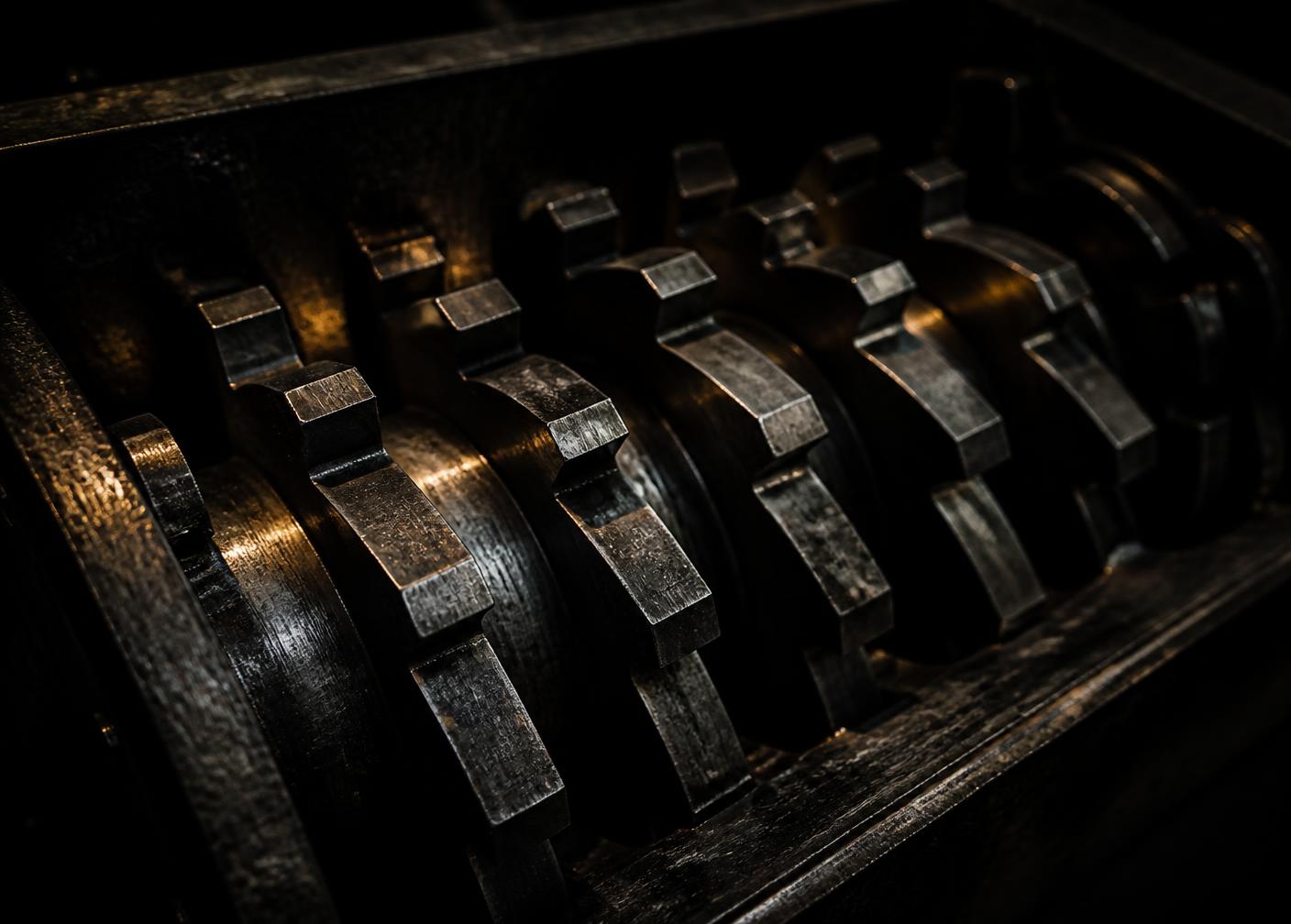
Shredders & Balers
Primary size-reduction and compaction equipment built for continuous industrial duty cycles.
- Duty
- 24/7
- Rotor
- Twin-shaft
Machines for the material age. Verto designs and manufactures the recycling systems, automation and intelligent hardware that turn recovered material back into industry.
Every recovery ambition ends at a machine. Collection can be organised, policy can be written, materials can be traced — but nothing gets separated, shredded, cleaned or rebuilt without physical equipment doing the work.
Most of the circular economy is sold as software and intent. Verto exists for the part nobody wants to build: the shredders, the sorting lines, the vision systems that tell plastic from metal in a fraction of a second.
Deep technology for physical infrastructure — not a slide, a machine on a factory floor.
“A recovery target is a mechanical problem. Somewhere at the end of every one of them, a rotor has to turn and a sensor has to decide.”
Primary size-reduction and compaction equipment built for continuous industrial duty cycles.
Material handling infrastructure that links every stage of a recovery line without manual transfer.
End-to-end processing lines engineered around a specific material stream — plastics, metals, textiles, e-waste.
Computer-vision sorting that identifies material composition and colour at line speed.
Sensors and controls that turn a mechanical line into a monitored, data-generating asset.
In-house design and manufacturing, built to be deployed, maintained and iterated in the field.
Most of our work is not a single unit — it is dozens of machines sequenced, balanced and controlled as one system. Composition study first, then the line that suits it.
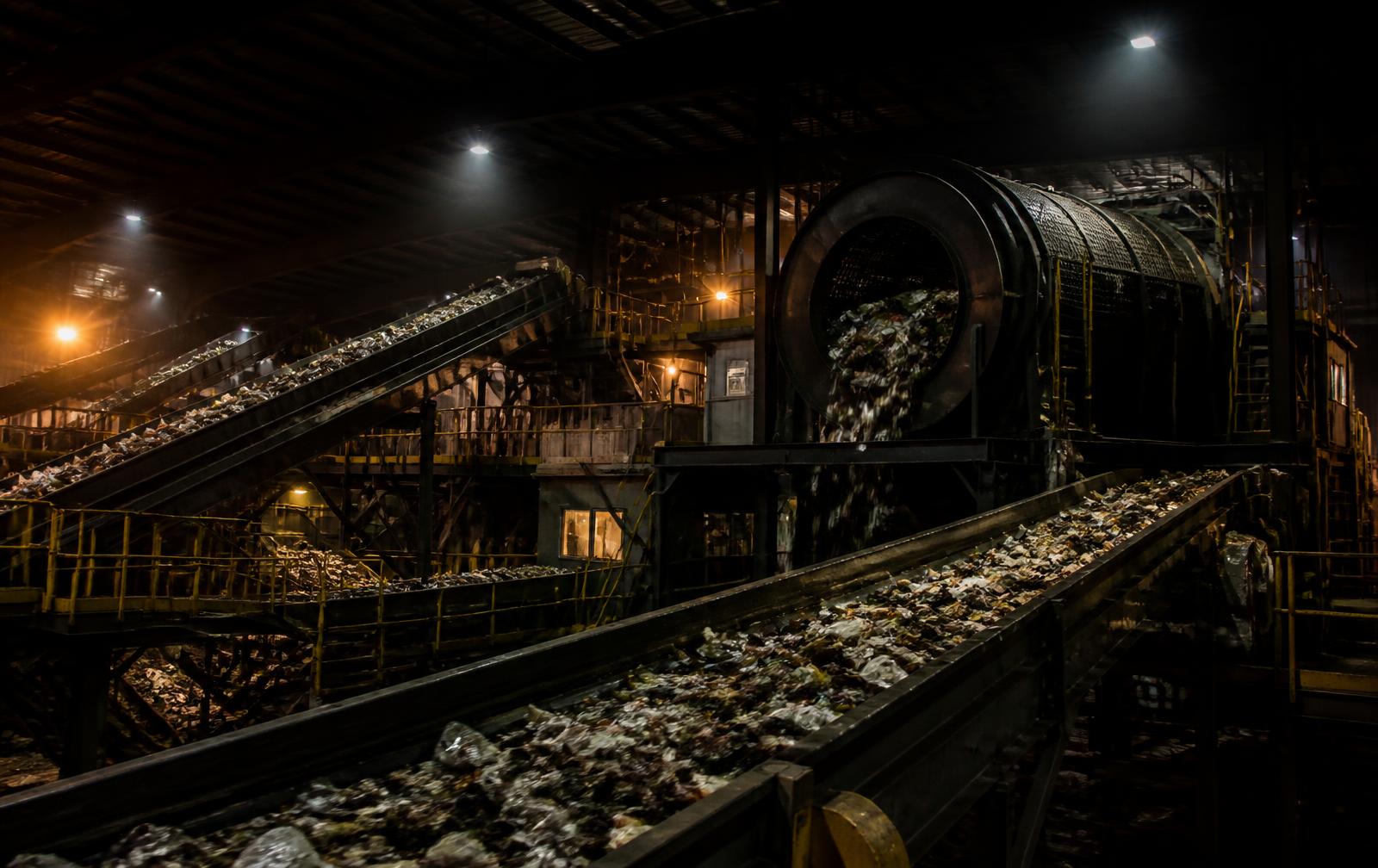
A full mixed-municipal-solid-waste plant: tipping floor to baled commodity, with organics and RDF taken off the same line. Designed around one city's waste composition, not a catalogue layout.
Walking-floor infeed, bag opener, slow-speed pre-shredder
Three-fraction split — fines, 2D, 3D
2D film and paper lifted off heavies
Ferrous drum, then non-ferrous ejection
Polymer-class and colour ejection at belt speed
Delta pickers finishing each commodity stream
Channel baler, weighbridge and mass-balance record
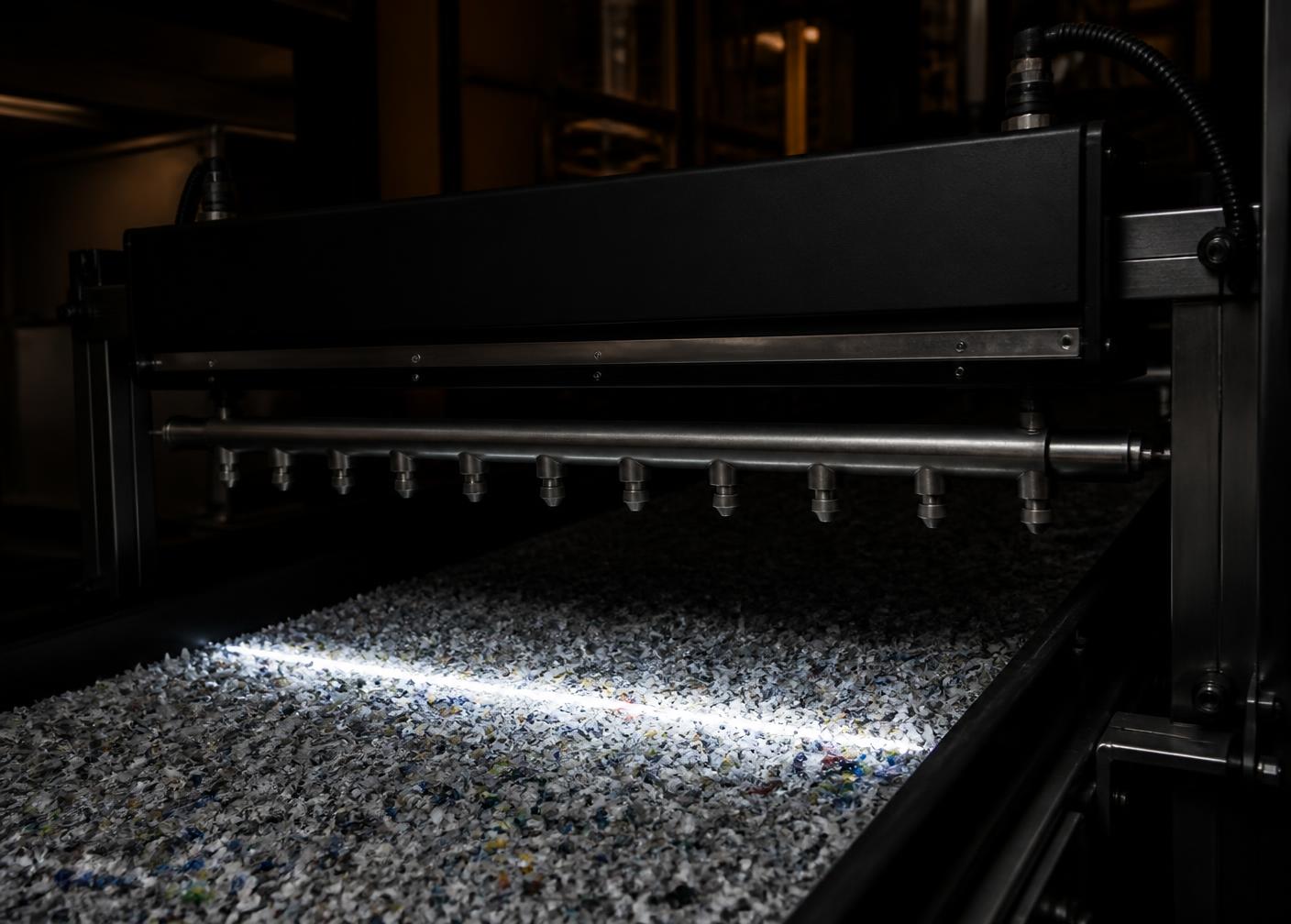
Every sorting decision starts with a measurement. We combine spectral, visual and electromagnetic sensing so the line identifies what a fragment is made of, not just how big it is.
Convolutional and transformer-based classifiers trained on material captured from live lines — contaminated, wet, deformed, overlapping — then compressed to run on the machine, not in a data centre.
A classification is worthless without mechanics fast enough to act on it. Valve bars, robots and drives are specified around the model's decision latency and the belt's velocity.
Machines are commissioned as a coordinated line: upstream load governs downstream speed, and every unit reports into a single control and telemetry layer.
Lines are modelled as discrete-event and CFD simulations against real composition data, so throughput, bottlenecks and recovery are known before steel is cut.
Recovery economics live or die on availability. Condition monitoring and wear design are part of the specification, not a service upsell.
Aspirational targets, not achieved figures — they describe the system Verto intends to build.
Verto partners with manufacturers, recyclers and industrial groups who need equipment, not another platform.